
Faculty and Visiting Faculty
lou ann walker
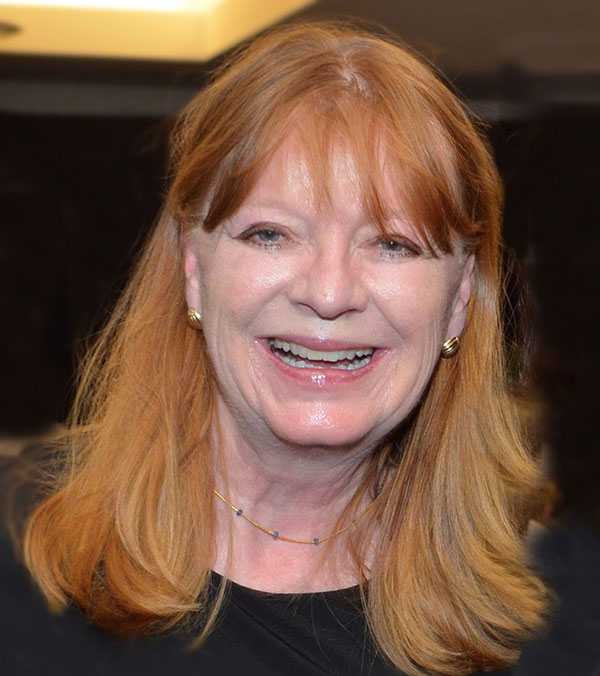
Executive Editor, The Southampton Review; Professor of Practice, Creative Writing
Lou Ann Walker's book, A Loss for Words, a memoir, won a Christopher Award. Her other books include Hand, Heart & Mind. Her fiction and nonfiction has appeared in many publications, including The New York Times Magazine, Esquire, Life, Allure, Parade, The Chicago Sun-Times, The New York Times Book Review, O, The Oprah Magazine, The Writer, and The Hopewell Review. Formerly an editor at Esquire and New York Magazine, Walker has lectured on writing at Smith College and Yale University, and taught
at Marymount Manhattan College, Southampton College, and Columbia University. The
author of several screenplays, she is a member of the Writers Guild of America.
FACULTY INTERVIEW:
What genre(s) do you write in?
Memoir and creative nonfiction.
I write essays and stories about compelling people whose lives may not be frequently seen. For example, I've written about children who've been severely burned and go to burn camp. I've written about people who are Deaf-blind, or people who are in the midst of having their children taken away. I also write and publish fiction.
What is the thing that excites you about the act of writing?
Every single bit of it, even the challenges. It's when one is most alive, when one is connected to one's thoughts and feelings, and when one is grabbing somebody else by the lapels and saying, You've got to know about this! This is important! That really matters to me.
Do you feel like your work is in conversation with other writers or work? If so, who/what?
In my head, I'm in conversation with so many people to whom I want to convey a message. I'm a voracious reader of memoir; the form has changed exponentially over the last few years. Since Frank McCourt’s Angela's Ashes, the form keeps metamorphosing in the best possible way. When I'm reading other people's work, such as Belle Burden or Oliver Sacks, I’ll think: I should have thought of that, or, oh, isn't that fascinating? That person has taken a very different look at what I've been thinking about or what other people I know are thinking about. I’m in conversation with their work in that way.
What literary magazine would you recommend to your students?
The New Yorker, The Atlantic, Bellevue Review, The Kenyon Review, and, of course, The Southampton Review, which I have been the founding editor of for 20 years.
What is your writing process?
I have one of those old-fashioned hourglass timers, and I turn it over for 45 minutes. I try very hard not to have anything else going on while I'm writing.
I write by hand first. I often write with a fountain pen, or I have a special Japanese pencil that I love. I find the way that thoughts are transported from the brain to the hand is slowed down from what happens when one is typing. It can also feel censorious to type. If I'm busy getting something down, I don’t want to know if I spelled something incorrectly. I also find that the process of translating the work from the written page onto the computer helps me do some initial re-evaluations.
How do you generate ideas?
If I'm struggling with an idea, when I put my head on the pillow at night, I just put the question in my head. And in the morning, often the question is answered. It is mysterious and gratifying.
How do you manage when you get stuck?
On top of putting a question in my brain at night, I have some other strategies. I slow down and drink some water. I might eat an apple. I’ll take a long walk. Showers are a great place to get unstuck.
Inspiration or perspiration?
A lot of inspiration comes from reading with perspiration. I’ll print out and cut up articles. I’ll pick up a murder mystery just to see how somebody charges through a sentence, or charges through a paragraph, or starts in media res. Frankly, I just swallow inspiration up from wherever I can get it.
If you weren't a writer, what job would you have?
I always knew I was going to be a writer. I also have always been a sign language interpreter. My parents are profoundly Deaf, and sign language was my first language. What I get to do in writing, that I also do as an interpreter, is try on different personae.
As an interpreter, I often have to be completely a blank canvas. I may have to quickly become a very angry person, screaming at somebody else, if that’s what I’m interpreting. I have to continually evolve in that way. I've been on Broadway in a one-woman show, just the main character and me. I've been on national television several times. When interpreting, I get to be many different beings, and I love taking that into my writing work.
Do you have a writing tip for emerging writers?
Obviously, you have to read. But my other writing tip? Sometimes the best things that happen, happen because you got rejected. I was once told that the start of my memoir was unpublishable. Of course, I was devastated. But what did I do the next day? I got right back up and I started it again. The book is still in print.