
The Condensed Matter Group Repeats as Chair's Cup Soccer Tournament Champions
The Condensed Matter Group has won the 5th Annual P&A Chair's Cup Soccer Tournament!
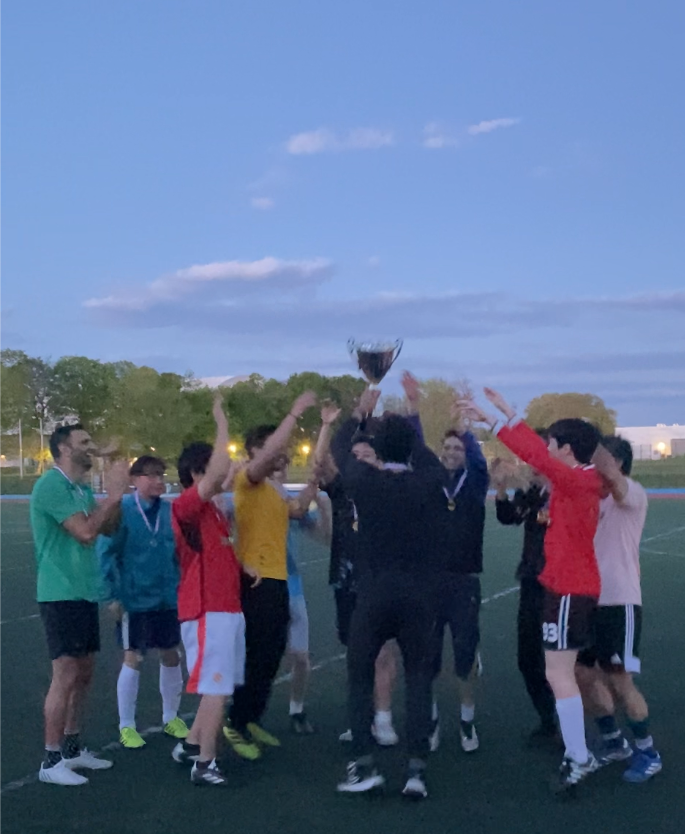
The awards presentation will be held during the first Friday Social of the summer (May 29), hosted by our Department Chair and the Condensed Matter Group.
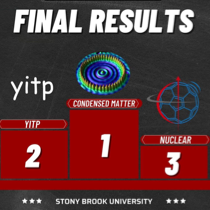
Beyond the competition, here are individual and team contributions:
- MVP (Most Valuable Player): David Frenklakh
- MSP (Most Scoring Player): Daniel Cazorla
- Best Goalkeeper: Raymond Blackwell
- Fair Play Award: Nuclear for their sportsmanship and inclusivity
- Commissioner Award: Social Media Manager Team (Mariia Mitrankova, Gillian Winters, Yuri Mitrankov)
Huge thanks to all players, organizers, and fans. This tournament wouldn't be possible without your energy and dedication.
Retirement of Professor Frederick Walter
Professor Frederick Walter has retired after 37 years as a Professor of Astronomy at Stony Brook University. Prof. Walter is an observational/stellar astronomer. He found the closest known neutron star to the Earth, and measured its 165 light-year distance, a discovery astronomers will forever associate with Stony Brook. He also started a course in science fiction which he has taught for 20 years.
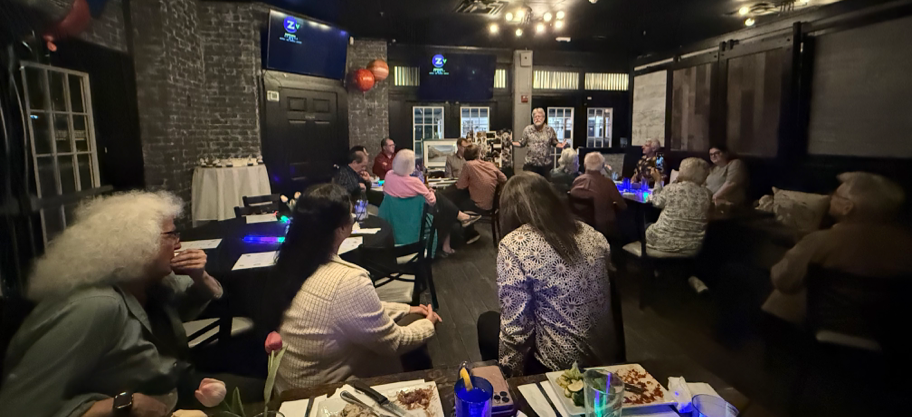
Professor Walter is a past president of the Stony Brook University Senate, and has been a statewide SUNY Senator. He is a former Vice President for Academics for the UUP Stony Brook West Chapter. He represents Stony Brook in the Associated Universities for Research in Astronomy (AURA), where he was formerly a member of the Board of Directors, and is the Stony Brook representative to the Astronomical Society of New York (ASNY).
We thank Professor Walter for his service to the department and wish him well in his retirement!
Undergraduate Research Day and the 4th Annual Undergraduate Colloquium
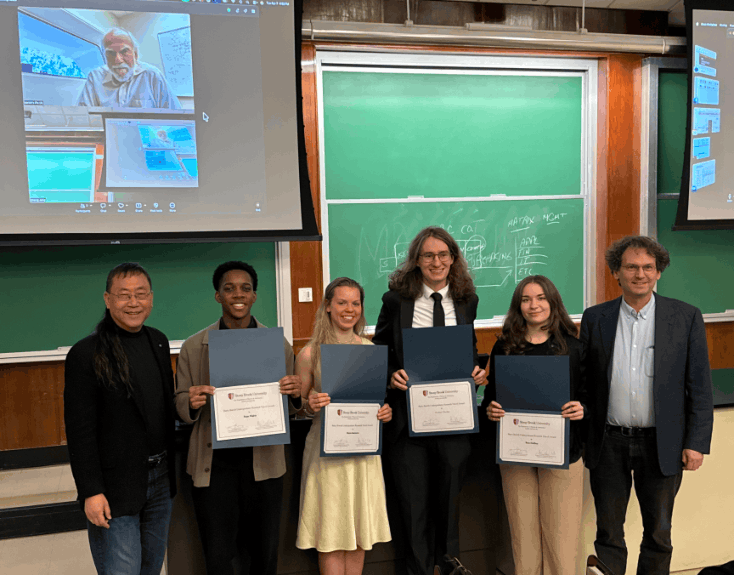
Undergraduate research is an important part of undergraduate education and plays an increasingly important role in developing future pioneering researchers, graduate school admission and even non-academic employment. On April 7, we celebrated the research done by our own undergrads.
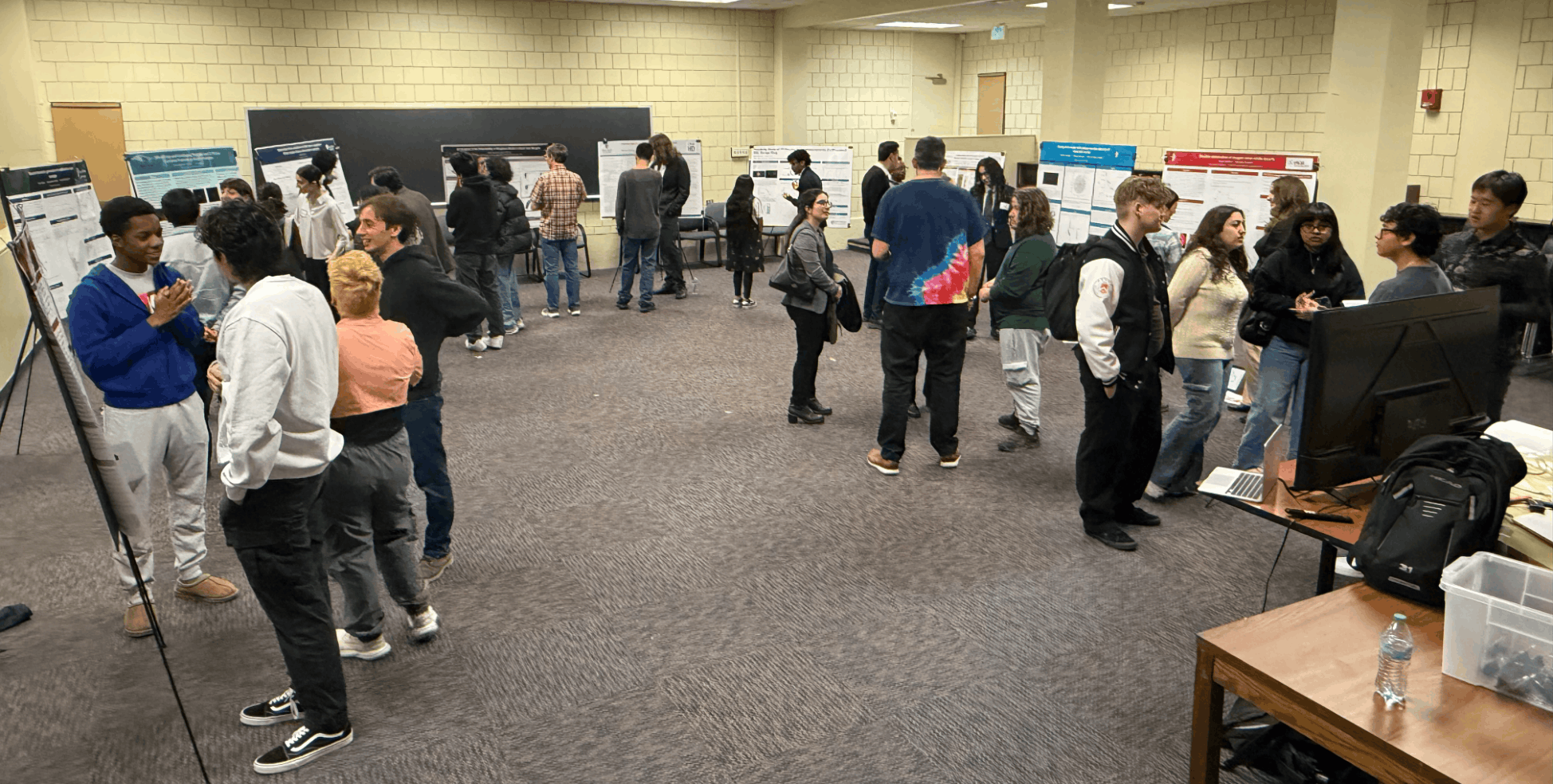
A team of judges at our Undergraduate Research Day chose students to present at this year's Undergraduate Colloquium. These students were also presented with the Barry Barish Undergraduate Research Travel Award. The awardees and their presentation topics are listed below:
- Zachary Cheslog (Advisor: Neelima Sehgal) - Current and Future Constraints on the Primordial Power Spectrum
- Rose Hoffren (Advisor: Michael Zingale) - Double-detonation of oxygen-neon white dwarfs
- Rojae Mighty (Advisors: Zhoudunming Tu, Arjun Kumar, Abhay Deshponde) - Geometric Scaling and Gluon Saturation at EIC
- Maria Sazonova (Advisor: Jesus Prez Rios) - Buffer gas cooling of charged fullerenes
Physics and Astronomy in the News
SUNY Honors Department Members
2026 Department Photo
Prof. Eden Figueroa to Lead New SBU Quantum Institute
Historic $12 Million Gift Propels Yang Institute into the Future
Prof. Simon Birrer Receives Prestigious DOE Early Career Award
2025 Season's Greetings
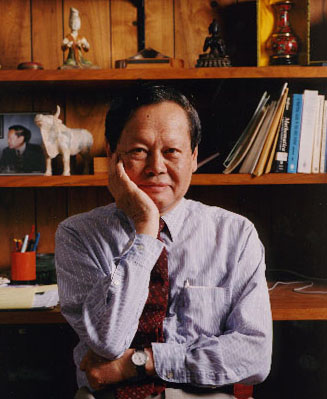 Late Prof. C.N. "Frank" Yang: 1922 - 2025